

Flexible office space in the UK is usually let on a licence, not a lease. You pay one monthly fee, commit for anything from a month to a couple of years, and give notice, often a month, when you want to leave.
There is normally a deposit, and in return you give up the right to renew that a business tenant on a lease would have. That trade-off is the whole point, and it is worth understanding before you sign anything.
We let private offices on flexible terms at Index House in Ascot, so we have explained these agreements across a desk many times. This guide sets out how the terms work across the market, where they vary, and the questions to ask any provider, including us.
What is flexible office space?
Flexible office space is any workspace let on short, mostly all-inclusive terms instead of a conventional lease. It covers serviced offices, managed offices, coworking desks and day offices, and the common thread is that you can move in quickly, change size and leave without a multi-year commitment.
The broker CityFlex describes flexible offices as ‘workspaces let on short, all-inclusive terms rather than a conventional lease’, which is a fair one-line definition.
The most common form for a small team is the serviced office: a furnished private room inside a building that provides reception, meeting rooms and a kitchen. Our plain-English guide to what a serviced office is walks through one of our rooms if you want the detail.
Is flexible office space a licence or a lease?
Most flexible office space is let on a licence to occupy, which is a personal permission to use the space on the provider’s terms, while a lease grants a legal interest in the property.
The difference matters because only a qualifying business lease carries security of tenure under the Landlord and Tenant Act 1954.
Security of tenure means a business tenant can, in most cases, stay on and ask the court for a new lease when the old one ends. Hubble’s guide to licences and leases puts it plainly: flex office occupiers have no automatic right to renew.
The label on the document is not the end of it. Under the House of Lords ruling in Street v Mountford (1985), an agreement that gives exclusive possession for a term at a rent is a tenancy in law, whatever it calls itself.
That is why serviced office licences usually keep the provider’s right to enter the room, move you to an equivalent room or share services. Law firm Penningtons Manches Cooper notes in its short-term occupation FAQs that a properly drafted licence will not confer security of tenure.
Very short leases are treated differently too. Section 43(3) of the 1954 Act excludes a tenancy for a term certain of six months or less, unless it can be renewed beyond six months or the occupier has been there for more than twelve.
| Licence (flexible office) | Lease (conventional office) | |
|---|---|---|
| Legal interest in the property | No | Yes |
| Typical length | 1 month to 2 years | 3 to 10 years |
| Security of tenure | None | Yes, unless contracted out |
| Notice to leave | Often 1 month after the minimum term | Fixed by break clauses |
| Deposit | Commonly 1 to 3 months’ fee | Negotiated, depending on the tenant’s finances |
| Furniture, utilities, reception | Usually in the fee | You arrange and pay |
| Repairs and dilapidations | Provider’s job | Often yours, under a repairing lease |
| Legal costs to sign | Low | Solicitors on both sides |
Treat the table as a guide to the shape of each agreement, not a quote.

How long is a short term office rental?
A short term office rental can be a single day, a rolling month or a fixed term of six to 24 months. Day offices and hot desks have no ongoing commitment, monthly licences roll until you give notice, and longer licences trade commitment for a lower price.
A conventional lease, by comparison, usually starts at around three years.
Published norms back that up. Wrest Park Business Centre, a managed office operator in Bedfordshire, says short agreements often run for an initial one to three months, extended ones for six to 24 months, and that licence periods ‘seldom exceed 2 years’.
Hubble puts typical serviced office licences at 12 months and managed office licences at 18 to 36 months, against three to ten years for a commercial lease.
The headline price often depends on the term. In our Bracknell office rents guide the lowest advertised serviced desk price in town was tied to a 24-month contract, which is a long way from flexible.
What notice period do flexible offices need?
After the minimum term, most flexible office licences need about one month’s notice in writing, though some ask for two or three. The detail that catches people out is timing: notice may have to expire at the end of a calendar month, or at the end of a fixed term, so check the exact wording.
Two clauses deserve a second read:
- Automatic renewal. Some fixed-term licences renew for the same term again unless you give notice before a deadline. Miss it and you are committed for another six or twelve months.
- Early termination. Leaving inside the minimum term usually means paying the balance or a set fee. Wrest Park notes that financial penalties typically accompany premature termination.
At Index House our offices run on flexible monthly terms with no long-term lease. The notice period and deposit for each room are set out in the licence and explained at the viewing, so you see them in writing before you commit.
How much deposit does a flexible office need?
A deposit of one to three months’ licence fee is common for flexible office space, depending on the length of the agreement and the provider’s view of your business. It is held against unpaid fees and damage, and returned after you leave, less any agreed deductions.
Ask three things about any deposit:
- How many months, and is it based on the fee before or after VAT?
- When is it returned, and how quickly after you move out?
- What can be deducted from it, such as redecoration, lost key fobs or unpaid extras?
Some providers also charge one-off set-up fees for phone lines, internet connection or access cards. Wrest Park lists these as common extras, so ask for them in writing alongside the deposit.
What does the monthly fee cover?
In a flexible office the monthly fee usually covers the furnished room, reception, the shared kitchen and, in most buildings, utilities and internet. What varies is everything at the edges: meeting room hours, printing, phone answering, parking, and whether rates and service charges are bundled in or added.
That is why two buildings quoting similar headline prices can cost very different amounts by the third month. Wrest Park’s own guide lists utilities, internet, maintenance, meeting room bookings and annual inflation-linked increases on renewal as things that can sit outside the fee.
At Index House the monthly fee includes the furnished office, reception, mail handling, meeting room access, the communal kitchen, secure storage, 24/7 access and free on-site parking. Our guide to serviced office costs in Berkshire compares that with other towns nearby.
Questions to ask before you sign
Take this list to every viewing. A good provider will answer each one in writing without hesitation.
- Is this a licence or a lease? If it is a licence, you have no right to renew when it ends.
- What is the minimum term, and what happens after it? Rolling monthly, or an automatic renewal for another fixed term?
- How much notice do I give, and when must it expire?
- What does leaving early cost?
- How big is the deposit, and when and how is it returned?
- Exactly what does the monthly fee include? Get the list, including rates, utilities, internet and meeting room hours.
- What costs extra, and at what price? Printing, call answering, extra keys, parking, set-up fees.
- How and when can the fee rise? Some licences link renewals to CPI or RPI.
- Can the provider move me to another room? Many licences allow it; ask how much notice they would give.
- Can I move to a bigger or smaller room mid-term?
- Who insures what? Your equipment is usually your responsibility.
- What condition must I leave the room in?
When flexible office space is the wrong choice
Flexible office space is not the cheapest answer for every business. A team of 20 or more with its own IT and facilities people will usually pay less per head on a managed office or a lease, because it is paying a serviced building to run things it could run itself.
The same goes for a business that wants to fit out a space to its own design, or one that wants the security of a long-term base with a right to renew. Those are good reasons to take a lease and pay for the solicitor.
Where flexible terms win is uncertainty. If you do not know how many people you will have in a year, or whether you will still want to be in the same town, paying a little more each month for the right to change course is usually money well spent.
Flexible terms at Index House
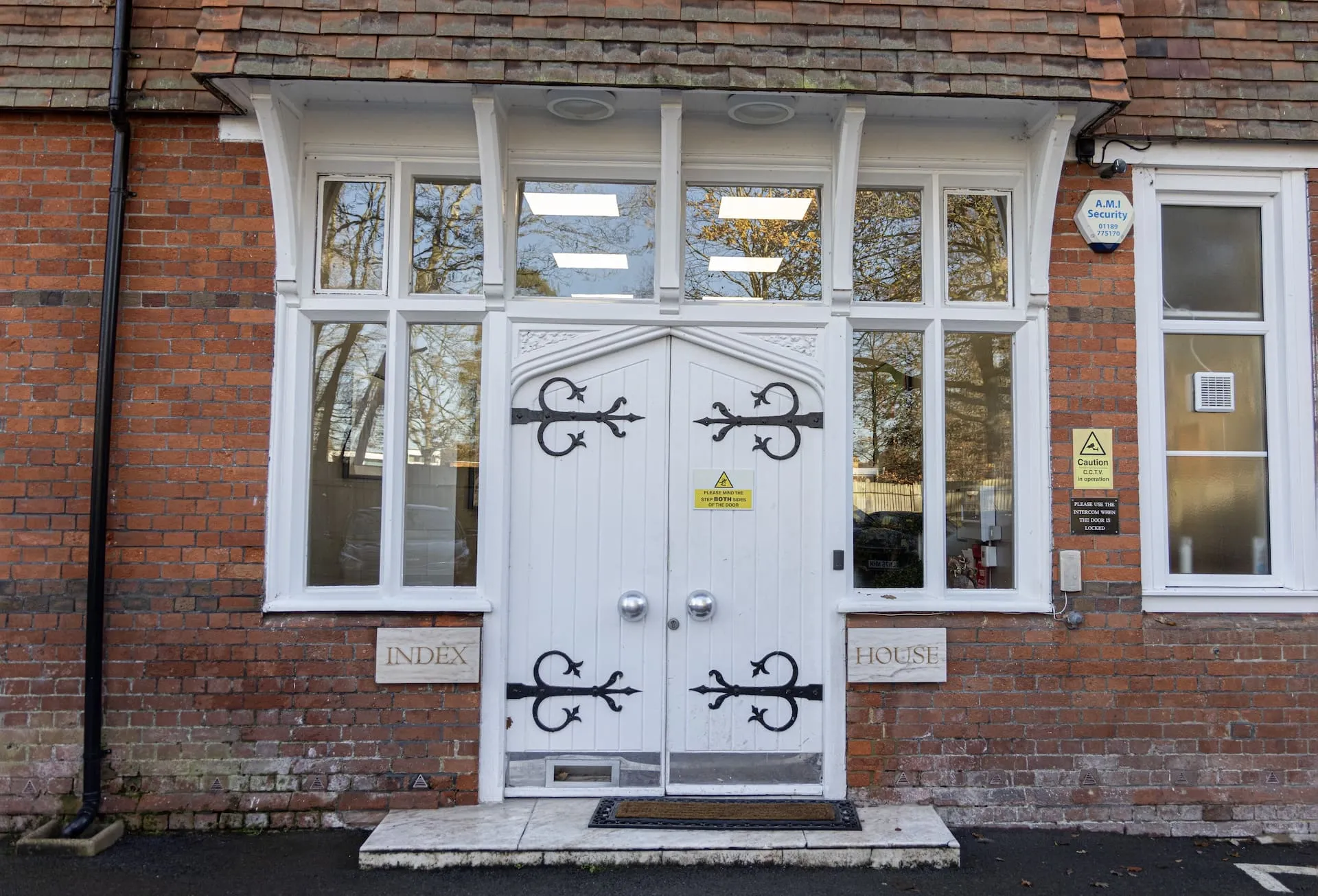
Index House is a Victorian building on Ascot High Street with private offices for one to eight people on flexible monthly terms. Right now a 140 sq ft office is £795 a month plus VAT, a 348 sq ft office is £1,995 and a 415 sq ft office is £2,395, with three more rooms coming up in January 2027.
What we see most often is not people leaving early but people moving up a size. Several clients have taken the next room as they hired, and some have stayed for more than 20 years on terms they were free to end.
If you are not ready for a monthly room at all, our hot desks are the same private offices booked by the day. It is a cheap way to find out how much space and commitment you actually need.
The serviced offices page shows which rooms are free this month. Book a viewing and ask us every question on the list above.